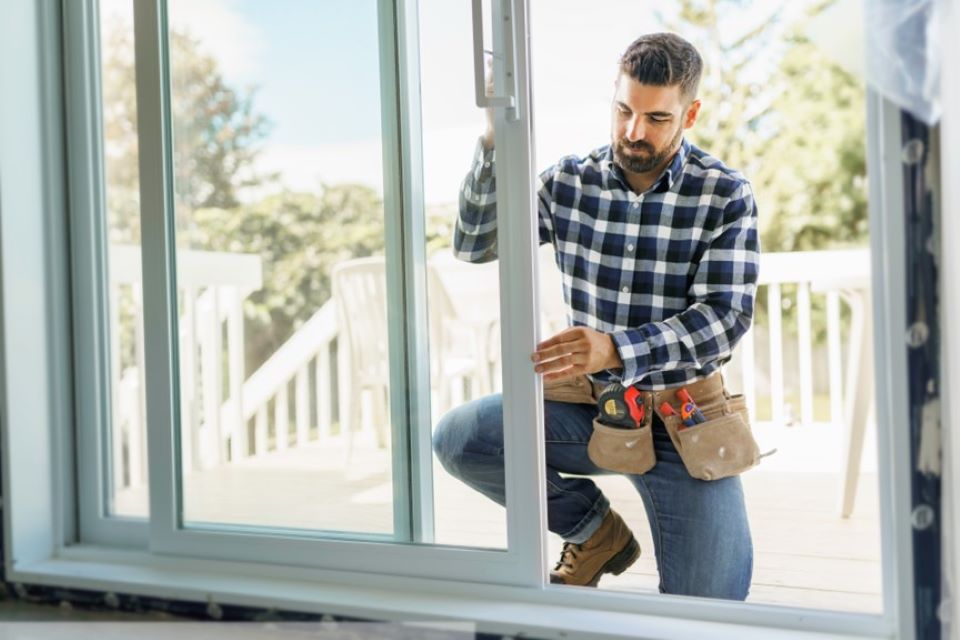
As cold weather arrives there are options to keep you and your family safe while preparing your home.
Reduce Drafts and Lower Your Utility Bill

Across the United States, only 1 in 10 homes are efficiently insulated. Sealing air leaks, like cold drafts, and adding insulation are among the important ways to save money while keeping your home comfortable.1 Common areas for drafts include the attic, doors, windows, and walls. Checking for air leaks, as well as the insulation levels in your walls and attic can help address cold drafts.
Likewise, air sealing methods, such as caulking and weatherstripping your doors and windows can seal off air leaks. You can also cover your windows with plastic. Indoor window kits, sometimes called polyethylene weatherstrips, insulation kits, and shrink film insulator kits, can be found in many home improvement stores, supercenters, and even online. Caulking and sealing air leaks around cutouts in the floors and walls, like the plumbing, ducting, and electrical wiring can also help. Installing foam gaskets behind outlet and switch plates on walls2 can also reduce energy use which will help you save money.
According to the U.S. Department of Energy, reducing drafts in your home can potentially save from 5% to 30% per year. For example, if you accrue $2,000 in gas bills, that’s between $100-$600 per year.
What to Know About Cold Air
Cold air can inflame the lungs and hinder circulation.3 One way to keep comfortable is to wear fabrics that are breathable while maintaining body heat. Fabrics like wool and polypropylene. Base layers, fleece lined garments, thermal shirts, warm slippers, wool socks. You may find that your feet get cold first. If so, prioritize from the bottom up.

Throw rugs can also add comfort, especially on bare floors. Having extra blankets are also a good option. And if you have a ceiling fan, reverse the rotational direction (clockwise) to help circulate warm air around the room.
Also know that shivering is a first sign that your body is losing heat.4 So, listen to your body.
Beware of Carbon Monoxide
Carbon Monoxide (CO) is a gas with no color or odor and can be harmful if it builds up in your home and you inhale it in large amounts.

Each time you use a fireplace, gas range, stove, and any other gas, oil, or coal burning appliance5 CO is produced and released. High concentrations can cause weakness, dizziness, upset stomach, and more. But there are ways to reduce your risk.
Be sure to install a battery operated or battery back–up CO detector near every sleeping area. Consider buying a detector with a digital readout as you can tell the highest level of CO concentration in addition to having a sounding alarm.

Here are additional guidelines from the U.S. Centers for Disease Control and Prevention:

What’s more, do not use a portable gas camp stove indoors. Or a portable flameless chemical heater inside your home. If you have a generator, keep it outside and at least 20 feet away from your home, doors, and windows. And never burn charcoal indoors.
Additional Resources
If you need help, contact the Energy Assistance Hotline toll-free at 1-866-674-6327 to ask about the Low-Income Home Energy Assistance Program (LIHEAP) in your state.
Your state’s Weatherization Assistance Program (WAP) may also be able to provide financial assistance for improvements like air sealing and insulation. See if you are eligible.
- EPA Save at Home. Washington, D.C.: U.S. Environmental Protection Agency. Why Seal and Insulate. Available from: https://www.energystar.gov/saveathome/seal_insulate/why-seal-and-insulate ↩︎
- Energy Saver. Washington, D.C.: U.S. Department of Energy. Air Sealing Your Home. Available from: https://www.energy.gov/energysaver/air-sealing-your-home ↩︎
- WHO Housing and Health Guidelines. Geneva: World Health Organization; 2018. 4, Low indoor temperatures and insulation. Available from: https://www.ncbi.nlm.nih.gov/books/NBK535294/ ↩︎
- CDC Winter Weather. Atlanta: U.S. Centers for Disease Control and Prevention; 2024. Safety Guidelines: During & After a Winter Storm. Available from: https://www.cdc.gov/winter-weather/safety/stay-safe-during-after-a-winter-storm-safety.html ↩︎
- CDC Carbon Monoxide. Atlanta: U.S. Centers for Disease Control and Prevention; 2024. Carbon Monoxide Poisoning. Available from: https://www.cdc.gov/carbon-monoxide/about/ ↩︎
I like to simplify complex topics and hold a baccalaureate from Columbia College, PAHM® designation, and a Certificate of Specialization in Health Care Leadership including certificates in Health Care Strategy, Health Care Economics, Digital Health, and Reducing Racial Disparities in Health Care from Harvard.
Discover more from What's Your Name?
Subscribe to get the latest posts sent to your email.


