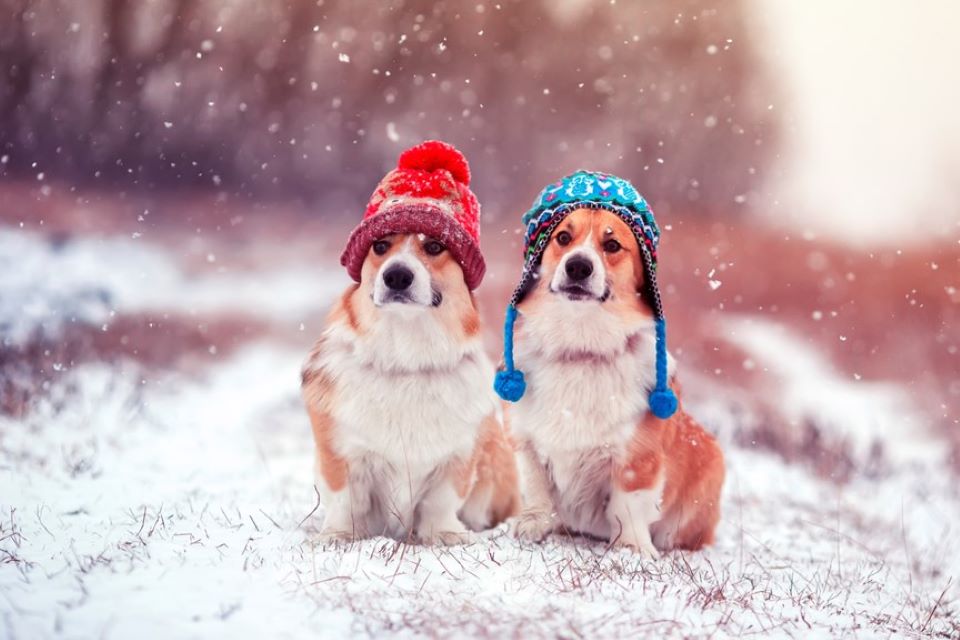
The moment you knew. You saw those eyes and that tail wagging in excitement. In a short while, you knew she would make a great addition to the family. Whether male or female, pets are wonderful companions. And during the winter season there are options to consider to keep them safe.
How cold is too cold for pets?
There are factors to consider when determining what’s right for your dog. Breeds that are not accustomed to cold weather (like toy breeds, hairless, or short-haired dogs), young puppies, dogs with an illness or senior dogs will generally need warmer temperatures.

According to USDA Animal and Plant Health Inspection Service, indoor temperatures for dogs not accustomed to the cold should not fall below 50°F (10°C) for four straight hours. For healthy dogs and other breeds, the temperature should not fall below 45°F (7.2°C). It is also important to provide plenty of water. Hydration helps regulate body temperature, even in winter.
If your dog is housed outdoors, be sure to have a wind break at the entrance. Add clean and dry bedding when the temperature falls below 50°F (10°C). Your pet will need additional bedding when the temperature is 35°F (1.7°C) or below. Straw, blankets, or wood shavings can help. This will allow for “nestling” which helps keep your dog warm. You may also want to consider an insulated dog house or bringing your dog indoors.
Signs of Cold Stress
All breeds can experience stress from cold weather. So be on the lookout for the following signs:
- Low rectal temperature
- Mental depression, lethargic, weakness
- Reduced heart rate and blood pressure
- Reduced breathing rate, shallow breathing

Hypothermia
Dogs exposed to cold weather for a prolonged period of time may experience a serious drop in body temperature which can cause illness, even death. Here are signs of hypothermia in dogs:
- Low rectal temperature
- Stupor, near unconsciousness
- Inaudible heart sounds
- Labored breathing
- Unconsciousness/coma
- Fixed and dilated pupils


If your pet shows signs of illness contact your veterinarian immediately.


